Mal Leicester
Profile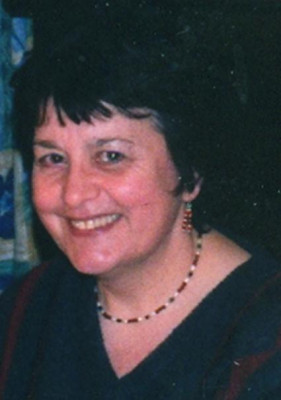
Professor Mal Leicester has a PhD in the philosophy of education and master’s degrees in education and in creative writing. She is Professor Emerita at the University of Nottingham, UK, where she supervised many PhD students whose research had a philosophical component. Previously she was senior lecturer in continuing education at the University of Warwick. She has been a secondary school English teacher, teacher trainer, and was Director of an anti-racist community organisation [AFFOR] in Birmingham. Mal was the head of the County of Avon’s multicultural centre with 60 teachers helping schools with English as a second language and multicultural curriculum development. Subsequently she became Avon’s Advisor for Multicultural Education.
Mal has published 12 books, 30 papers in refereed journals, 20 chapters in books and many papers in conference proceedings. She was often invited to give a keynote lecture or staff seminar in a wide variety of countries. She has also published children’s story collections, including six anthologies with curriculum materials. These stories and activities contributed to the moral development of pupils. Mal edited a collection on Ethics, Ethnicity and Education with Monica Taylor, six volumes on Education, Culture and Values with C. and S. Modgil and a collection on Lifelong Learning with John Field. Mal’s publications and teaching have included a concern with equal opportunities, philosophical aspects of moral education, multicultural education and lifelong learning. Underpinning this variety of interests was a commitment to justice and to the values of empathy and respect for all.
For many years Mal was the UK Book Review Editor of the Journal of Moral Education, following on from Peter Tomlinson. Mal also guest edited two special issues of the JME: one on ethnicity, culture and moral education and one on lifelong learning and education.
Mal leads a philosophy discussion group with approximately 20 members. This keeps alive her lifelong interest in philosophy and contributes to her own lifelong learning and to that of the members. She is a Fellow of the Royal Society of Arts and member of the Philosophy of Education Society of Great Britain. She lives in Lincolnshire with her grandson and son-in-law and their two dogs.
Conversation Themes
- Early Years – family support and love of story: working class background, with close extended family in and on outskirts of Manchester, UK; gave much security as ‘part of a tribe’; first from family and school to go to university; experience of achievement; eldest of three, younger twin brothers for whom she enjoyed making up stories, ‘came naturally’; parents ‘decent, intelligent, moral and politically aware’; having lived with both working class and middle class has experienced the ‘wrongful assumptions people make about the working class’; identified with working rather than middle class; family support, not school.
- Higher Education – philosophy: University of Wales, Aberystwyth, BA English and Philosophy; interest in philosophy sparked by Dostoevsky’s The Brothers Karamasov – the problem of evil; love of philosophy’s abstract nature, concepts and ideas; reflected in professional life and publication of philosophical papers analysing concepts of equal opportunities in relation to ethnicity through antiracist multicultural education; disability awareness; and lifelong education. MEd. The Justification for Religious Education; PhD Metaphysics and Multicultural Education; alongside working life and a bringing up a daughter.
- Professional Life
- Experience of Ethnic and Cultural Diversity: multicultural secondary school teaching; college lecturer; joined Grunwick protest [1976-8 thousands of black and white, male and female workers defended the rights of migrant women] and became more politicised; worked for All Faiths for One Race (AFFOR), a multicultural community organisation in Birmingham, becoming Director, ‘learnt things you can’t learn from books’; Head of Multicultural Education Centre and County Adviser, Avon (1982-7) with 60 staff teaching English as a Second Language; and developing a multicultural curriculum and curriculum materials.
- Experience of Disability: led to Stories for Disability Awareness (2007), including a chapter written by her disabled daughter; role of personal experience: daughter’s inability to reason abstractly yet deeply empathetic, sympathetic and kind; interrelationship between moral learning, disability, personal and professional lives (see paper in JME Special Issue (SI), Moral Learning: Integrating the Personal, Professional and Political (40: 3, 2011). A collection, Disability Voice: Towards an Enabling Education (1999) focussed on equal opportunities issues voiced by people with disabilities.
- Connections with Moral Education: crossing boundaries; submission of paper, ‘Moral education, education of the emotions, and multiracial education; their interconnection’ to JME (1981); member of JME Editorial Board (1984-2009); Book Review Editor (1990-9); lively discussions and with Peter Tomlinson (see obituary JME (54:3), 2025); curriculum materials reviews; international conferences (MOSAIC, AME, e.g. 1990 symposium with Dwight Boyd). JME SI Guest Editor, Race, Culture and Moral Education (15:1,1986); making explicit connection of discrimination on grounds of ethnicity and race as a moral issue in joint editorship of Ethics, Ethnicity and Education (1992); Terry McLaughlin.
- Adult and Lifelong Education: University of Warwick, Lecturer, then Senior Lecturer in Continuing Education (1987-99), ‘felt like coming home’; Professor and Chair of Adult learning and Teaching, University of Nottingham (1999-2003); edited collection with John Field, Lifelong Learning (2000): theoretical, curriculum, international perspectives, contemporary issues, linking with disability, race and third age; JME SI Guest Editor Lifelong Moral Education (27:3,1998); making the connection with neglected area.
- Publications – philosophical underpinning to neglected and controversial equal opportunities issues: 12 books, 30 papers in a wide range of peer-reviewed journals; 20 chapters in books and many conference presentations; Philosophy of Education Society of Great Britain (PESGB) central to interests, conferences ‘kept me on my toes’; cultural discrimination; ongoing interest in ‘Cinderella and controversial areas’; philosophical underpinning – clarity, abstract ideas and certain values; drawing on one area to illuminate another (e.g. prejudice and institutional discrimination); significant differences and commonalities between oppressed groups; ageism and moral education (JME first editor, Derek Wright, observed in 1976 that JME had yet to publish a paper on moral development in old age; still the case), another area of unequal opportunity still to be explored in relation to stereotyping and discrimination.
- Post-employment Learning and Activities
- MA in creative writing; belongs to various writing groups; runs local adult philosophical discussion group (to meet their interests, wide ranging and culturally diverse); reading and preparation supports her lifelong learning; support group for families with children with Tourette’s Syndrome;
reader for newspaper for the blind; - drawing out of implications for policy and practice; relationship to political commitment to trying to change society in academic and personal writing; e.g. Jane’s Journey (2020), date about daughter’s rich life, living with a brain tumour over 50 years, as a medical pioneer and with a husband and son; includes appendix for people looking after disabled patients in hospitals lacking a close relative as advocate.
- writing of stories, e.g. Making Miracles for a charity supporting couples wanting a child; many stories deal with moral concerns and issues ‘I would see my story collections as a contribution to moral education’.
- practical suggestions for study skills, Get a Better Grade (2017) and Take Great Notes (2019).
- MA in creative writing; belongs to various writing groups; runs local adult philosophical discussion group (to meet their interests, wide ranging and culturally diverse); reading and preparation supports her lifelong learning; support group for families with children with Tourette’s Syndrome;
- Reflections
Pleasure in unexpected feedback and influencing others in their work. Seeing practical needs and collaborating with others; social element, writing as a creative process and learning together. Collectively important that academics make informed contributions to society.