Brian Gates
Profile
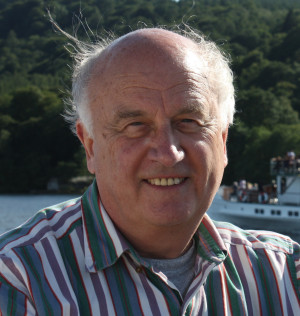
Brian has lived most of his life in the north-west of England. Born in Morecambe, attending local schools, after 14 years away for university and first full-time job, he returned north to create a family home in Capernwray with his wife Brenda and their two sons.
He studied first in Oxford, then in New Haven USA at Berkeley and Yale Divinity Schools, before teacher training in Cambridge. He taught for eight years at Goldsmiths ’ College in London, becoming a principal lecturer there and engaging part-time in PhD research at Lancaster University. In 1975 appointed to St Martin’s College, Lancaster as head of department. He continued there for 35 years, including its transition to the University of Cumbria.
He is now Emeritus Professor of Religion Ethics & Education. Since retiring, in addition to his research interests, he concentrated on his voluntary work as elected Chair of RE Council of England and Wales until 2011, and as trustee of Inter Faith Network and JME . His priorities are online portal development and family (two sons - older in New Zealand and younger in Hucknall, near Nottingham).
Running throughout his personal and professional life are a) shaping vision b) the pursuit of fairness and good cheer. These were inherited from his parents, encouraged by successive teacher-mentors, and articulated in terms of open Christian conviction: in high school a) Biblical text and project on Cromwell b) teamwork and discipline without threats, collaboration with sister girls school, Oxfam Day for the whole town;
as student at university a) Oxford: Eric Heaton and OT Prophets. New Haven: Werner Rode and Tillich, David Little and Social Ethics b) ecumenical collaboration, inc WCC work camp in Austria;
teaching and research at Goldsmiths a) Catherine Alder being Head of Dept, Ninian Smart as PhD supervisor b) promoting degree structures which rate academic and professional emphases equally c) intensive engagement with boys and girls aged 5-16 - Protestant and Roman Catholic, Hindu, Jewish, Muslim and Unattached;
teaching and research at St Martin’s/ University of Cumbria a) Religious Studies already included Religious and
Atheistic Thought (RAT), development of Honours degree in Social Ethics b) internal and external collaboration
to create a National Moral Education Centre, as chair of Staff Common Room welcoming support-staff into membership;
in Shap Working Party on Education in World’s Religions a) ensuring inclusivity of RE is justified on academic,
social and political grounds b) organising conferences on the interface between Religions and Ethics;
in the JME Editorial Board and Trust a) encouraging other board members to concur with the Editor’s lead in
globalising JME’s scope b) seeking ways to support the Editor in conditions of employment and work-load
management;
in the RE Council a) conjoining the interests of academic and professional associations with those of faith
communities b) from its outset supporting the inclusion of the British Humanist Association in its membership.
During the last decade focus on developing websites, each with a distinctive moral thrust:
www.moralcapital.info now reworked as www.moraleducation.info a participational global resource,
www.communityclapping.org now www.commonwealthing.org promoting an approach to school assemblies
and worship that is genuinely inclusive in its cross-curricular concern for moral and religious identity,
www.armisticenow.org Beyond War; the matter of beliefs and values.
Conversation Themes
- Family background and early years: eldest child with two siblings, now in USA and UK; father primary school headteacher and mother very caring, running household; pursuit of ‘fairness and good cheer’ in family life; ‘joyous happiness’ and ‘belief full realism’; Christian underpinning and Church of England attendance (not pious), ‘once born’ (Wm. James; ‘not twice born’); strong sense of hope and delight at living and awareness of how wondrous it is to live (animals on family farm and climbing in Lakeland hills, cloud lifting and distant horizons revealed); context in which he found world shaped and revealed, ‘crucial moments’; explication of ‘revelation’ religious and natural, varieties of religious experience (Wm. James), and UK-born inclusive rights within Church and Nation.
- School experience: affirmative, especially by a history teacher (Dante and Oliver Cromwell) and two specialists in Religious Education (RE) (significance of Biblical text and scholarship).
- Higher education: Oxford scholarship (Theology) and postgraduate scholarship (inc Fulbright Travel) to Berkeley and Yale Divinity Schools, and influential teachers – Tillichian, and Troeltschian Social Ethics; contrasting experiences of teaching and learning between UK and US. Postgraduate Certificate in Education (PGCE) Cambridge; PhD Lancaster (supervisor Ninian Smart) with fieldwork in SE and NW England simultaneous with London lecturing role. Ongoing intellectual and personal connection with USA, also global horizons (e.g. member SHAP Working Party on Education in World Religions (1969 – 2019).
- Teacher education and professional development: University of London, Goldsmiths College (Lecturer, Senior Lecturer, Principal Lecturer, 1967-75); ‘lay ordination’, ‘serving the community’ through education in religions rather than clerical ministry; shared tutorial room with Richard Pring; equal balancing of academic and professional elements in degree components. St Martin’s College/ University College of St Martin’s, Lancaster 1975- 2006 (Principal Lecturer, Head of Religious Studies/Dept. of Religion & Ethics, Professor); 2006-8 University of Cumbria (Professor), 2008ff - (Emeritus Prof). Return to roots and institutional career anchor; contrasts between large multicultural London base and small but lively, north-western college, open to diversification and development in addition to teacher education (e.g. developing liberal arts and other professional degrees). Innovatory Social Ethics degree developed with specialist academic staff: cross-disciplinary components in comparative ethics, law, moral philosophy and social sciences; specific areas in applied ethics – discrimination, environment, gender, health, war + peace, work + wealth. Experiences in Religions and Social Ethics provided academic underpinning for Religious Education (RE) and Moral Education (ME). Creation of government-funded national ME Centre at St Martin’s in 1980.
Congenial departmental working relationships, with equal teaching loads, meant implicit support for London-based links (e.g. SHAP, Religious Education Council of England & Wales (REC), and Interfaith Network), seen as in interest of department and college, but perpetual north-south travel and extra responsibilities impacted family time.· RE, ME and Voluntary Bodies: Gates, B., ‘The politics of Religious Education’ in Progress and Problems in Moral Education (Taylor, M., Ed., 1975) drew on PhD research, ‘Religion in the Developing World of Children and Young People’, 336 children aged 6-16 from diverse institutional religious backgrounds and none, individually interviewed about their beliefs and values, ‘enriching and … deepening my understanding of others more generally’. Different educational responses to religious diversity reflected in engagement with voluntary bodies of diverse membership; SHAP conferences; Chair of REC 1984-90 and 2002-11. REC influenced the UK government's Educational Reform Act (ERA) in1988 to legislate that in addition to Christianity other “principal religions” including Islam, had to be studied in RE in all state-funded schools; and in the government’s National Framework for RE (NFRE) in 2004 REC supported further recognition of Humanists, smaller religious groups and the education of conscience. Relative recognition of RE not ME in national legal requirements.
· JME and global development: Member of JME Editorial Board (EB), 1985-2011; uniquely Chair of the EB and of Journal of Moral Education Trust (JMET) 1999-2006; supported Editor’s global development and outreach of JME with the Association for Moral Education (AME) and the Asia Pacific Network for Moral Education (APNME), as well as in South America and Africa in first decade of millennium; JME 25th anniversary conference in 1996 at St Martin’s, first international conference, collegial experience over a week, foundation of subsequent professional relationships; 1989 guest editor of JME Special Issue Moral Education East and West included first paper from mainland China, began opening up professional relationships with colleagues in Asia and beyond; development of a JMET website moralcapital.info; renegotiation of publishing contract gradually improved income to JMET and latterly in last ten plus years (2015-26) improved subscriptions and royalties enabled JMET as owner of the JME to support ME by research scholarships through the British Academy, travel scholarships and writing workshops for AME and APNME conferences; organisation of JME 50th anniversary conference in 2022. 2025 reconstitution and relaunch of JMET website www.moraleducation.info, encouraging user feedback and contributions.
· Publications and good works: articles in a wide range of academic and professional journals, books (e.g. Transforming RE: Beliefs and Values under Scrutiny); moving things on, wanting to communicate, making opportunities for learning, discussion and debate; in 2013 award of MBE in UK for contributions to RE and interfaith relations; in 2023 the Good Work Award from AME; endeavours informed by intellectual rigour, openness and dialogue; creating opportunities for students, scholars and representatives of organisations, energetically and with a degree of passion, optimism and good cheer.