Angela Chi-Ming Lee
Profile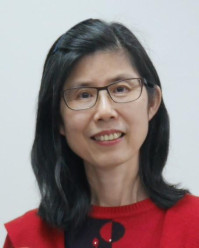
Angela Chi-Ming Lee is Distinguished Professor (Retired) of Civic Education and Leadership in the College of Education at National Taiwan Normal University (NTNU), Taiwan. Trained in education with interdisciplinary grounding in moral philosophy, moral psychology, and curriculum studies, her scholarship has centered on citizenship education as well as moral and character education across theoretical, empirical and policy dimensions.
Over more than three decades, Professor Lee investigated moral development at individual, institutional and societal levels. Her early work explored moral curriculum reform and the transformation of moral education during Taiwan’s transition to democracy. She subsequently expanded her research to encompass moral development, moral emotions, moral exemplars and school moral culture. From this sustained program of inquiry, she articulated two integrative theoretical frameworks. The first, Character-Based School Culture (CBSC), conceptualizes the moral ecology of schools and has informed educational policy development in Taiwan. The second, Moral Thinking and Communication (MTC) competencies, constitutes a multidimensional model integrating four interrelated components — moral awareness, moral judgment, moral discourse, and moral decision-making — within moral functioning, offering both normative grounding and empirically informed guidance for moral pedagogy.
Professor Lee has authored eight scholarly monographs and over 100 peer-reviewed articles in Chinese and English and has led more than 40 research projects supported by Taiwan’s National Science and Technology Council (NSTC) and the Ministry of Education (MOE). Her scholarship consistently integrates theory and practice, bridging local foundations with international dialogue. Emphasizing the cognitive, affective and behavioural dimensions of moral and character education, her work ensures that research contributes to both conceptual clarity and actionable pedagogy. Her studies have examined the foundations and micro- and macro-level contexts of Taiwan’s civic and moral education, undertaken cross-strait comparative research involving the People’s Republic of China, and contributed to global discussions linking Taiwan with the United Kingdom and the United States.
Beyond research, Professor Lee actively contributed to the international academic community. She has been a member of the Association for Moral Education (AME) since 2001, served on its Executive Board (2004–2007), and was a member of the Editorial Board of the Journal of Moral Education (JME) from 2005 to 2024. In Taiwan, she served as a long-term advisor to the Ministry of Education on curriculum standards, civic and moral education, human rights education, and textbook review.
Having concluded her full-time 37-year academic career in August 2024, at nearly 60 years of age, Professor Lee chooses to situate her intellectual commitments within broader social and lived contexts. Rather than remaining institutionally anchored, she is now committed to moral inquiry into multiple dimensions of civic life, community engagement and everyday ethical reflection. For her, civic and moral education is not confined to academic discourse but continues as an ongoing practice of thoughtful participation and ethical caring in society.
Contact Email: t11023@ntnu.edu.tw
Personal website (in Chinese): https://reurl.cc/q8vemy
Conversation Themes
Educational Roots & Academic Calling
- Academic journey & critical awakening: growing up in the disciplined environment of a military village; a transformative debate experience and involvement in student leadership at senior high school; intellectual influences of studies at National Taiwan Normal University.
- Interdisciplinary grounding & solitary path: PhD research broke new ground critiquing political ideology in "De-Yu" (Moral Education) comparing Taiwan and Mainland China; influenced by Kohlberg, disciplinary integration to challenge martial-law era 'loyalty' narratives; working against prevailing currents re-framing moral education as a critical civic endeavour rather than traditional character training.
Scholarly Contributions & The MTC Model
- Bridging global & local landscapes: commitment to internationalising Taiwanese scholarship; reflected in six English publications including: longitudinal analyses of Taiwan’s democratic transition, collaborations mapping 50 years of global moral education trends; and auto-ethnographic reflection bridging the professional and the personal.
- Trilogy of moral dimensions: six works in Traditional Chinese address the Cognitive (MTC Model), Affective (Moral Emotions), and Action (Moral Exemplars) dimensions of education; support for practitioners developing moral school ethos during shifting academic paradigms.
From Policy Advocacy to School Ecology
- Policy as a bridge: linking scholarly inquiry and Taiwan’s educational reforms, advocating the reintegration of moral values and for critical thinking over passive indoctrination.
- Nurturing moral ecology: partnering with school principals to foster a school-wide, collaborative model, away from rigid discipline toward an authentic engagement with contemporary life.
Bridging Local Foundations with Global Dialogue
- Professionalising moral pedagogy: reorienting moral education towards a democratic, evidence-based scientific framework, replacing traditional disciplinary approaches and unexamined Confucian assumptions with rigorous, professional inquiry; collaborating with colleagues conducting cross-national studies (Taiwan, UK, US), positioning Taiwan as an active contributor to global research; advocacy for professionalisation, seeking to replace unreflective routines with rigorous, integrated inquiry into the cognitive, affective, and action dimensions of morality.
Cross-Cultural Dialogue & The Wisdom of Retirement
- The 'Long River of Memory': for over 25 years, JME and AME provided an intellectual home for nurturing research, while APNME served as a vital platform for fostering regional understanding; collaboration with Monica Taylor on the 40th and 50th anniversary analyses of JME as 'academic genealogy', mapping the field’s historical trajectory, a partnership demonstrating 'academic humanism', a living network of human relationships bridging the intellectual divide between East and West.
- The 'Owl and the Crane': suggesting a reversal of cultural stereotypes, and that wisdom lies not in changing one's voice to fit a new context, but in allowing that voice to resonate through cross-cultural encounter.
A transformative new chapter: engaging with retirement as a 'more integrated phase of life' in which through Taiwan’s evolving history.
A Written Conversation between Monica Taylor and Angela Chi-Ming Lee
A Written Conversation between Monica Taylor and Angela Chi Ming Lee