Ann Higgins D'Alessandro
Profile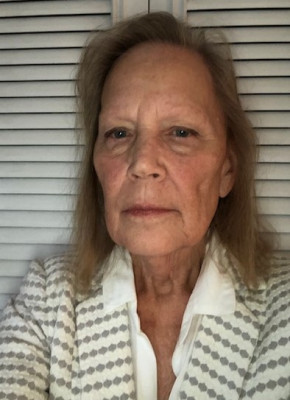
Ann received the BS from Iowa State University for studies in psychology, microbiology, and media, the MS from the University of Wisconsin in Educational Psychology, and the PhD from Pennsylvania State University in Human Development. The post-doctoral position at the Center for Moral Development and Education, directed by Lawrence Kohlberg, Harvard, Cambridge, MA. was an excellent fit. Ann stayed for a decade as Senior Researcher and for two years following Kohlberg’s death to oversee his professional affairs. Ann and Larry were engaged to be married at the time of his death. From a young age, witnessing or being caught up in what she saw as unfair situations activated her; later, feminism and the civil rights movement became her action points. Throughout her career, Ann sought developmental theories and moral philosophies that offered perspectives on whole persons embedded in their life circumstances and on human group functioning in order to pursue questions of embedded moralities and competencies, of self and groups in action. Schools were rich resources. At Harvard, her post-doc focus resulted in Lawrence Kohlberg’s Approach to Moral Education (F. Clark Power, Ann Higgins, & Lawrence Kohlberg, 1989) which tells the 4-year story of students and teachers building a Just Community through active discussion, debate, and democratic voting. Analyses showed a bumpy but rising road to valuing others’ ideas and developing shared norms of fairness, cooperation, integration, etc which engendered moral practices -- mutual and individual responsibility, integrity, respect, and support. Secondarily, Ann co-authored the substage appendix of the Moral Judgment Scoring Manual (Anne Colby & Lawrence Kohlberg, 1987). She also worked with a group consulting to worker owned companies (Demos, Inc), authoring evaluation research, and served as a director of the Clinical Developmental Institute, a group of clinicians sharing developmentally sensitive therapeutic approaches.
In 1990, Ann joined the Psychology faculty at Fordham University, NYC, where she taught for 33 years. She directed the Applied Developmental PhD Program, served as Graduate Chair, co-founded an interdisciplinary Disabilities Studies major, and was a founding member of the Fordham Social Innovation Collaboratory--university-wide initiative to foster changemaker attitudes and generate projects furthering social justice. She mentored 41 PhDs and many MS, BS, and high school honors students. Her graduate teaching areas covered cognition, intervention and evaluation, undergraduate areas covered moral and self-development, cultures and societies, and labs on intellectual development and memory. She retired with 85 research publications, 4 books, and ideas for more.
She continued educational evaluation research creating qualitative interviews and quantitative measures, e.g., the Moral Self Interview, the School Culture Scale (Higgins & Sadh, 1997) for teachers and students, and the Teacher Roles and Interactions measure, among others. The School Culture Scale is well used, adapted for sports (Karin Heinrich, 2015) and other programs (SCS-Work, Higgins-D’Alessandro, 2009), and translated into over a dozen languages from European to mid-Eastern and Asian. Among the excellent PhD students in her lab, were Elly Vozzola, Sister Jeanine O’Kane, Ronel Roth-Hanania, Sara Vecchiotti, Maria Reyes, Susana Frisancho, Ping Guo, John Gomez Varon, and Yi Shi and many undergraduates who conducted several multiyear investigations, first, into outcomes of Just Community programs in Bronx and Scarsdale, NY, high schools, and two Safe Schools, founded by David Rowse in Birmingham and Nuneaton, Great Britain. Second, they modelled the effectiveness of whole school character interventions in New York, New Jersey, and Virginia. Results demonstrated enhanced student and teacher social cognitive understanding and in situ moral, emotional, and cultural identity development during the late primary and secondary years. Theoretically predicted robust results showed teachers’ positively valuing their intervention work environment was critical for intervention effectiveness which supported school culture--moralized norms of fairness, respect, community, etc., and was the mediating lynchpin for student thriving and graduation. Ann co-edited the 2 volume Handbook of Prosocial Education (2012), dialogues among practitioners and researchers across a range of interventions. During the George W. Bush administration, Ann advised the U.S. DOE Character Education office co-authoring its evaluation manual for educators (Mobilizing for Evidence-Based Character Education, 2007).
Ann’s lab included students conducting research in the new area of social cognitive processing in children and adolescents with autism. Among the innovative research projects: Amie Senland designed a protocol that successfully assesses everyday moral problem understanding and solving in adolescents and youth with ASD (Moral reasoning and empathy in adolescents with autism spectrum disorder: Implications for moral education, 2013, JME; Sociomoral reasoning, empathy, and meeting developmental tasks during the transition to adulthood in autism spectrum disorder, 2016, JADD); Xioming Liu developed computerized pictorial problems for young non-verbal children with ASD demonstrating purposeful cognition (A social problem-solving approach to attention shifting in working memory of children with autism spectrum disorder, 2015, Diss Abstracts); and Caitlin Calio developed a 10-week support group for college students with ASD siblings revealing deep intimacy-their sense of self, attending college to be nearby home, and future life plans were intimately tied with their sibling relationship (It’s really unexplainable, but everyone here got it: Analysis of an ASD sibling support group for emerging adults, 2021, RASD).
The Association for Moral Education (AME) has been an anchor and vision for Ann. She was an early president, served on numerous committees and several times on the Board over the organization’s first 52 years. Recently she originated the Strategic Initiatives Development committee, which offers small grants to AME members for innovative practice/action efforts that show promise to impact local, national, or international practices, exchanges, and educational opportunities for educators. Initial funding came from her husband, Thomas D’Alessandro and herself. The AME website has wildly successful examples.
Conversation Themes
- Harvard and UK links, mid-1970s: Participation in formative Leicester University Conference 1977, organised by Derek Wright (first Journal of Moral Education (JME ) Editor) with Larry Kohlberg (LK) and a team; then in second year of introduction to moral education; ‘engaged’ and ‘infectious’, ‘exciting’ anticipation ‘ the start of something’, ‘if I had any doubts about my involvement in moral education it wiped them out’; at Harvard thrown into a job, doing research; Kohlberg and Wright hit it off, ‘met their match’.
- Background qualifications: BSc Psych ‘actively seeking something’; minor course in biology, fascinated by DNA; early interest in ‘doing good’, wanted to become a minister, but not open to women; MA Ed. Psych, Wisconsin, formative with Bill Looft, introduced to Larry Kohlberg’s cognitive work; wanted to be involved with ‘morality, values and people being responsible for who they are’; scholarship to Penn State, PhD Human Development; two years running attended Harvard Graduate School Summer Program on the Moral Reasoning Scoring Manual [on Penn State scholarship and in return teaching Kohlbergian moral theory and research to psychology graduate classes]; LK encouraged her to apply for position as a researcher before finishing PhD (feminist practices in ordinary women’s lives); ‘risky’ professional and personal move [as they had begun a relationship; she made the move].
- At Harvard with Larry Kohberg: LK’s charisma, ‘listening attentively’, ‘compelling’ and encouraging human being; Ann open, enjoyed being with other people; at Centre for Moral Education, Harvard, mid-70s to late 80s; Bob Selman; LK’s work controversial; other academics studied or came for debates for periods of time, e.g. Jane Loevenger, James Fowler, Fritz Oser, Wolfgang Edelstein, Monika Keller, Jim Rest, Carol Gilligan, Clark Power, Jurgen Habermas, Dwight Boyd, Howard Gardner [Helen Haste, David Rowse, many others]; every Friday a seminar to present, discuss and debate different influences, mix of philosophy and psychology; Kohlberg The Philosophy of Moral Development, The Psychology of Moral Development; ‘the best environment in the world… and I would still say that, looking back today; I worked the hardest, intellectually the hardest, I learnt the most, it was just an amazing time’; relationship between theory and empirical evidence and the process of establishing a system of coding moral judgement interviews (MJI) and moral development; scoring system met recognised criteria; male/female differences; Larry Walker’s metanalysis showed education made a difference; cross-cultural use of the MJI and involvement, e.g. with Japan (Nobi Iwasa),China (Dwight Boyd) and India (Richard Shweder); due to building strong empirical base subsequently measures differed some in different cultures. Some ignoring of previous work. Extended communication processes pre-internet. Personal relationship and Harvard’s liberal atmosphere; ended with Kohlberg’s death in 1987.
- Just Community Projects in the Bronx, New York: Kohlberg’s two models: Montessori ideas and children with developmental challenges in Chicago, and kibbutzim systems of mentoring from kindergarten to high school in Israel; he became interested in moral education in working with teachers promoting democracy through open discussion in experimental classrooms in Boston cluster schools; Ann both an interventionist and evaluator; discussion of this as evolving practice in psychology and its divisions; inclusion of critical appraisal of evaluation in relation to intervention developed in her graduate courses; contrasting Bronx projects – Scarsdale, Theodore Roosevelt High School, Bronx High School of Science – grants and attempts at measuring moral development into early 1990s, grant reports and published articles, but regrets lack of full book publication; mitigated by Power, Higgins and Kohlberg, Lawrence Kohlberg’s Approach to Moral Education [1989],theory and practice of the just community; for last few years has been gathering longitudinal data on past students, the morality [and civic commitments] they see as threads in their lives and adult development.
- Professional life in 30-year career at Fordham University, New York, from 1990: Associate Professor of Psychology, Director of Graduate Programs, Associate Chair Psychology Dept., Professor of Psychology 2012-22, Professor Emerita; took range of interests and work experiences, but two not continued at Fordham: prior clinical work certification, trained by William Perry with background in active listening; worked as clinical psychologist at Harvard; with Bob Keegan, Gil Noam, Laura Rogers, started Clinical Developmental Institute and practised; also experience fostering worker-owned companies and evaluation. Contrasting atmosphere: Harvard interdisciplinary, Fordham straight Psychology; enjoyable graduate and undergraduate teaching, became dynamic, intellectual engagement through involvement in student discussion; favourite program: interdisciplinary on individual human development in relation to family, school, society and moral development, gave MJI as homework, involving social values, character; mentoring of 40 doctoral students prior to their varying professional occupations. Empowering of students and faculty through graduate program. However, only person taking morality seriously at institution; JME and Association for Moral Education (AME) as supportive academic communities; JME Editorial Board, 2011-16.
- Selected publications: 8 papers on diverse subjects published in JME 1987-2002, including invited paper in 40th Special Issue; wide range of papers in other peer-reviewed journals. Emphasis on prosocial education and development: in 2 vol. Handbook of Prosocial Development (2012), a guide to practice and evaluation over US-wide values and virtues programs, arguing ‘the social climate of school is as important if not more important than academic learning and has to exist for academic learning to be successful’; in paper on Kohlberg’s Legacy (2014), emphasised development as the aim of education, focus on the moral, transforming schools to just communities and to promote compassionate societies ; early work creating School Culture Scale, translated and well used; reflected in JME 40th Conference, with AME and Asia Pacific Network for Moral Education, Nanjing, 2011 presentation, ‘How does an intervention work to change a school and promote student outcomes?’, importance of teacher characteristics and student participation and voice. Paper on feminist perspective as a contribution to democratic discussion as a dynamic practice, key to development. Influence on David Rowse’s Values Education for Life (see Conversation).
- AME: founder involvement; due to ‘vision and strength’, ‘sheer willpower’ of Lisa Kuhmerker, wanted ongoing organisation to instantiate philosophical and psychological discussion of Columbia and Harvard seminars to ‘make a field’ of moral education; meeting places around Boston and New York, related to then current projects in prisons and schools; later to Minnesota; commitment and ‘intellectual home’, ‘the only place I’ve felt intellectually excited constantly throughout my academic work through 40 years’; bringing in students and teachers, presentations on dissertations. Recognition from AME: President 1985-6, Kuhmerker Career Award 2000, Gift of Time, Keynote 2018; served on the Board several times and conference organiser in 1995. Since 2022 involved with Strategic Initiatives Development (SID) Committee to raise money to fund grants to groups for action, training, outreach, e.g. project on kindness in USA, another on residential colleges in Spain. Ann first significant donor. SID to broaden involvement of practitioners and ‘give members a chance to work in ways to make a difference in the world’. Ongoing tension between academic research and practice in the field. Is there progress in moral education? Finer distinctions, still different labels. AME should stay a ‘big umbrella’ but also a place for ongoing debate about what moral education is and how it should be taught. AME has been a home for debate and different viewpoints; need for conversations to be continued. Has come to value AME as a community, for its open discussion and friendship.
Recording
Conversation between Monica Taylor and Ann Higgins D'Alessandro