Helen Haste
Profile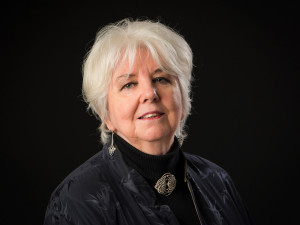
Helen Haste is Professor Emerita in Psychology at the University of Bath, UK, and was a Visiting Professor at Harvard Graduate School of Education from 2003-2018. For nearly six decades she has been working on the development of young people’s moral, civic and political beliefs, identity and behaviour, including the educational, cultural and social factors which influence these developments. Her work is based on a theory of culture and the individual that addresses language, rhetoric and metaphor. In line with this, she has also worked on cultural factors in how science is perceived in society, including how these influence young people’s choices of study and career. Another major strand in her work has been the role of gender and feminist theory. She uses both quantitative and qualitative methods. Her data sources are international, including the UK, China, South Africa and Europe.
Her research on civic and moral engagement and education includes questions about ethics, moral, social and civic understanding and the relationship between values, activism and citizenship. What promotes, and what inhibits, youth civic participation?
She was Director of the Harvard Graduate School of Education's Spencer Foundation-funded New Civics Early Career Scholars' Program which supported doctoral students whose research interests concerned civic education and civic engagement.
Helen Haste is the author or editor of eight books and over two hundred scholarly papers. From 1977 onwards she took on a nurturing role in the development of MOSAIC*. She has had a connection with the Association for Moral Education since 1980, including organizing its 2016 conference, and a 30-year association with the Journal of Moral Education. She was Chair of the Journal of Moral Education Trust between 2007 and 2013. She was President of the International Society of Political Psychology in 2002 and co-editor of the journal Political Psychology (2010-2015). For thirty years she had leadership roles in the British Association for the Advancement of Science including Vice President and Chair of Council.
Haste has held a number of international visiting appointments, in Hong Kong, China and the United Kingdom. She is a recipient of the Association for Moral Education's Kuhmerker Award for her lifetime contribution to the field of moral development, and two of the International Society of Political Psychology's career awards, the Sanford Award and the Knutson Award. She is a Fellow of the British Academy of Social Science, the British Psychological Society and the Royal Society of Arts. She has been a frequent contributor to broadcasting and public media.
Conversation Themes
- Liberal Upbringing and Early Experiences: Australia and UK; awareness of other cultures; ‘shocking experience’ of apartheid; moral anger.
- Becoming Academically involved in Moral Development: awareness of Kohlberg’s work; influence of UK Leicester Conference, 1977; evolving a long (1970s-2018) and active academic connection with Harvard, e.g. Centre for Moral Education, Graduate School of Education; research and teaching: cross-disciplinary, gender and civic education; collegiate community.
- University of Bath: evolution of Psychology Department, degrees and cross-disciplinary work in master’s programmes.
- Inauspicious Climate for Moral Education and Development in UK in 1970-90s: lack of popularity of moral education and moral development in UK, with a focus on reasoning rather than virtue as traditional; public perceptions of morality as personal; development of moral person seen as elitist not liberal.
- Personal Activism: anti-nuclear (CND) protest, pro-peace, anti-apartheid, feminism; ethical beliefs and moral responsibility; from gendered self-belief to false consciousness; recognition more valuable contribution to be made as feminist researcher relating science and gender.
- Broad Definition of Moral Education and Development: moving into civic education; focus on agency and social change; theoretical and empirical research; language and metaphor (The Sexual Metaphor); cultural framework and dialogue; gender and transgender.
- Popular Communication of Intellectual Ideas: using research through different media to influence popular thinking; involvement in the British Society for the Advancement of Science; co-working developing public understanding of science as professionally and personally important; comparison with lack of bridge building in moral domain.
- International Contacts and Work: e.g. South Africa, Latin America, China; developing awareness of other cultural concepts of civic and moral development by working with colleagues and in the cultural contexts of other countries.
- Involvement and Roles in JME, AME and other professional organisations: many contributions, recognition and awards.
- Reflection on a Life of Professional Engagement
Recording
Conversation between Helen Haste and Monica Taylor