Don Locke
Profile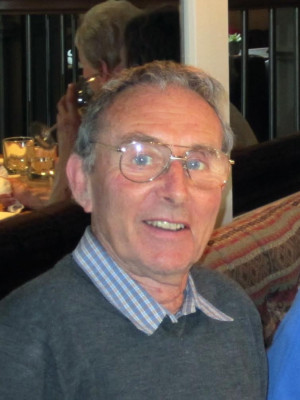
I was born in New Zealand in 1938 and educated to Master’s level at the University of Canterbury. In 1960 I was awarded a New Zealand Post-Graduate Scholarship to study for a B.Phil at the University of Oxford, UK, in those days the go-to degree in Anglo-Saxon philosophy. After that I taught at the University of Newcastle upon Tyne for six years, and then at the University of Warwick, where I was promoted successively to Senior Lecturer, Reader and Professor. During those years I also held visiting posts at several universities in New Zealand and in the United States .
My interest in moral development and moral education was aroused first by a psychology seminar at the University of Waikato, New Zealand, in 1975, and then by a landmark conference at the University of Leicester in,1977, where the interdisciplinary discussions, both formal and informal, were among the most stimulating of my career, and led to the formation of a small group discussion forum called MOSAIC (Moral and Social Action Interdisciplinary Colloquium) which met regularly over the next ever years. These topics dominated my thinking and writing for the next 10 years, during which time I was also involved with both the Journal of Moral Education and the Society for Applied Philosophy .
In 1989 I decided to take early retirement with the rank of Emeritus Professor and try my hand at other things. I was first in charge of the UK office of the International Children’s Trust, with projects in India, Sri Lanka, Thailand and Mexico, and then, after a gap, in a similar position at the British Orienteering Federation. In the interval I did voluntary work of various sorts. In this period my academic involvement was minimal .
In 2006 I returned, with my wife, to New Zealand, to Wellington where (as it happened) I was born, though I left there at the age of 3. Almost by chance I made contact with the Philosophy Department at Victoria University and regained my interest in philosophy, both participating in and occasionally presenting seminars there. We returned to the UK in 2024, where I am Emeritus Professor of Philosophy, University of Warwick .
Conversation themes
- Background and early years: born and educated in New Zealand (NZ), left for UK as a young man and postgraduate scholar; both parents active Communists in NZ and brought up in a left-wing environment; ‘flack’ in school’; uninterested in politics as a young man, although two out of three younger siblings took it up; interest in jazz; comparisons with UK then and now; nominative determinism and later becoming a philosopher, mother’s influence; religious education in school and temperance movement; women and the vote.
- Postgraduate education and academic life in UK: Oxford BPhil, Gilbert Ryle and generalism, ‘two really stimulating years’, many fine teachers and active graduate school; American experiences; appointment at Newcastle University (UK) (Lecturer in Philosophy, 1962-68); Warwick University (Lecturer, Senior Lecturer, Reader and Professor of Philosophy,1968-89); visiting appointments in USA and NZ.
- Academic publications: (see criteria for selection https://moraleducation.info/workrooms/persons/conversations-with-moral-educators); writing a biography, A Fantasy of Reason The Life & Thought of William Godwin, linking life with theories; Myself and Others, developed out of theory of mind, which later grew significantly into cognitive psychology, computer science etc; festschrift by colleagues on retirement in 1989, To Myself from Others - Helen Haste’s contribution ‘Indiana Locke exploring foreign terrain and trying to make sense of it’ as a philosopher engaging with psychology; visiting experience in University of Waikato 1975, introduction in psychology department to Lawrence Kohlberg’s theory, sourcing work in UK, leading to contact with Derek Wright (first JME Editor)and stimulation of University of Leicester 1977 Conference, with transatlantic interdisciplinary meetings and seminal interest in moral education (ME) ‘far and away the most stimulating academic conference I’ve ever been to’, beginning of many longstanding academic and personal relationships (e.g. with Peter Tomlinson; Ian Vine; and MOSAIC).
- MOSAIC reminiscences: (see https://moraleducation.info/workrooms/persons/conversations-with-moral-educators/helen-haste/mosaic); academic and personal friendships with Helen Haste, Ian Vine, Peter Tomlinson and other members of MOSAIC; a formalised outcome: co-editing of Morality in the Making: thought, action and the social context (1983) .
- Kohlbergian critique: publication of ‘Cognitive stages or developmental phases? …’ JME, 8 (3) 168-81; ground shifting, Kohlberg changing position, learning, ongoing debate, evolution, major influence, becoming a global industry reflected in pages of JME for 35 years or so.
- Post-academic work and voluntary activities: informed by interest in ME; disenchantment and dissatisfaction with academic life, philosophy and teaching after 30 years, early retirement; new work utilised organisational skills (e.g. International Children’s Trust, British Orienteering Federation, Citizen’s Advice Bureau, ‘rewarding and frustrating dealing with people in poverty’).
- Involvement with JME and JME Trust: member of EB 1989-99, becoming its Chair coincided with retirement, undertook for 10 years; working relationship with the Editor; ownership of the journal by Social Morality Council (SMC); revamping the EB, becoming international and improving the gender balance, rules of election/appointment; supportive of attendance at Association for Moral Education (AME) in N. America; role of the publisher and contract, royalties, lack of finance; roles of Chair of EB and Editor; negotiations with NFER re time and publishing; support of establishment of the Values Education Council (VEC), National Association for Values in Education and Training (NAVET); JME 25th anniversary conference with Brian Gates at University College of St Martin’s, Lancaster - planning, the programme and the main speaker, Bernard Williams; communality, celebration, social and cultural activities; transfer of ownership of JME from SMC to establishment of the JME Trust as a charity, Chair of the JME Trust and the Trust’s foundation on an independent and surer basis for the JME’s future.
- Reflections on a long academic and professional life.